
Why Youth Pitchers Get Arm Pain (And Why Arm Strength Isn’t the Answer)


If you’re a youth baseball pitcher—or a parent of one—arm pain can feel scary and confusing.
The most common assumption is:
“My arm hurts, so my arm must be weak.”
But here’s the truth I see every week in my clinic:
👉 Most arm pain in youth pitchers is not an arm problem.It’s a whole-body movement problem that shows up at the arm.
Understanding this difference can be the key to keeping pitchers healthy, confident, and on the field long-term.
Arm Pain Is a Symptom, Not the Root Cause

Throwing a baseball is one of the most complex movements in sports. It involves:
Legs generating force
Hips transferring energy
Core stabilizing and rotating
Shoulder blade controlling motion
Arm and elbow delivering the pitch
If any part of that chain breaks down, the arm is forced to compensate.
And when the arm compensates repeatedly? Pain shows up.

That’s why many pitchers:
Stretch their arm
Strengthen their rotator cuff
Ice after games
…but still hurt.
They’re treating the symptom, not the system.
The Biggest Mistake: Only Training the Arm

Rotator cuff exercises and band work are not bad — they’re just incomplete.
The mistake happens when:
Arm exercises are the only focus
Mechanics and movement quality are ignored
Pain is treated in isolation
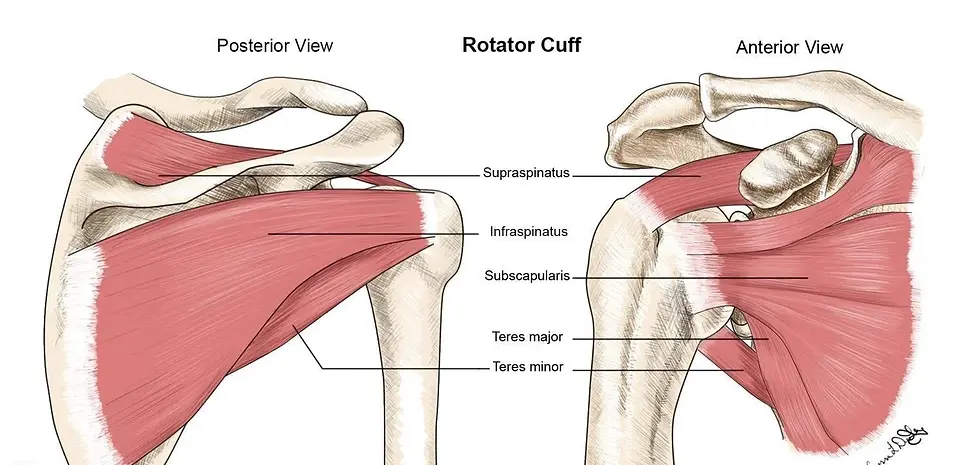
The rotator cuff’s main job is stability, not power.If the hips and trunk aren’t doing their job, the shoulder and elbow take on forces they were never meant to handle alone.
This is where overuse injuries start:
Shoulder pain
Elbow pain
Loss of velocity
Chronic tightness
“Dead arm” feeling
What Actually Keeps Pitchers Healthy

Healthy pitching starts from the ground up.
Here’s what truly matters:
1. Hip Control & Rotation
The hips are the engine of the throw. Limited hip mobility or poor control forces the arm to work overtime.
2. Core Stability
A strong, stable trunk allows energy to transfer smoothly from the lower body to the arm.

3. Scapular (Shoulder Blade) Control
The shoulder blade is the foundation of shoulder motion. Poor control here leads to stress at the shoulder and elbow.
4. Shoulder Mobility (Not Just Strength)
Pitchers need the right amount of motion — not too stiff, not too loose.
5. Smart Workload & Recovery
No amount of training can overcome:
Too many innings
Too little rest
Poor recovery habits

Why Stretching Alone Isn’t Fixing the Problem

Stretching can feel good — but feeling loose doesn’t mean you’re moving well.
Many pitchers stretch areas that are already unstable instead of:
Improving control
Fixing mechanics
Building resilience
In many cases, more control beats more flexibility.

What Parents Should Watch For
Parents are often the first to notice subtle red flags:
Arm soreness lasting more than 24–48 hours
Pain that moves from shoulder to elbow
Loss of velocity or accuracy
Complaints of tightness every outing
Fear or hesitation when throwing
These are signs the body is compensating, not just “getting stronger.”
The Goal: Long-Term Health, Not Short-Term Gains
Youth pitchers don’t need:
More random exercises
More throwing through pain
More “push through it” advice
They need:
Proper movement
Smart progression
Education
A plan that looks at the entire athlete
Arm pain shouldn’t be normalized.
Final Takeaway
If you remember one thing, let it be this:
Arm pain in youth pitchers is usually the result of a breakdown somewhere else in the body.
When you address the whole system — not just the arm — pitchers:
Stay healthier
Recover faster
Throw more confidently
Perform better over time
Want Help?
If you’re a pitcher or parent dealing with arm pain, stiffness, or performance issues:
Save this article
Share it with a teammate or parent
Or reach out and ask about a full-body pitching movement assessment
Because the goal isn’t just to throw harder this season —it’s to keep throwing for years to come.


Comments